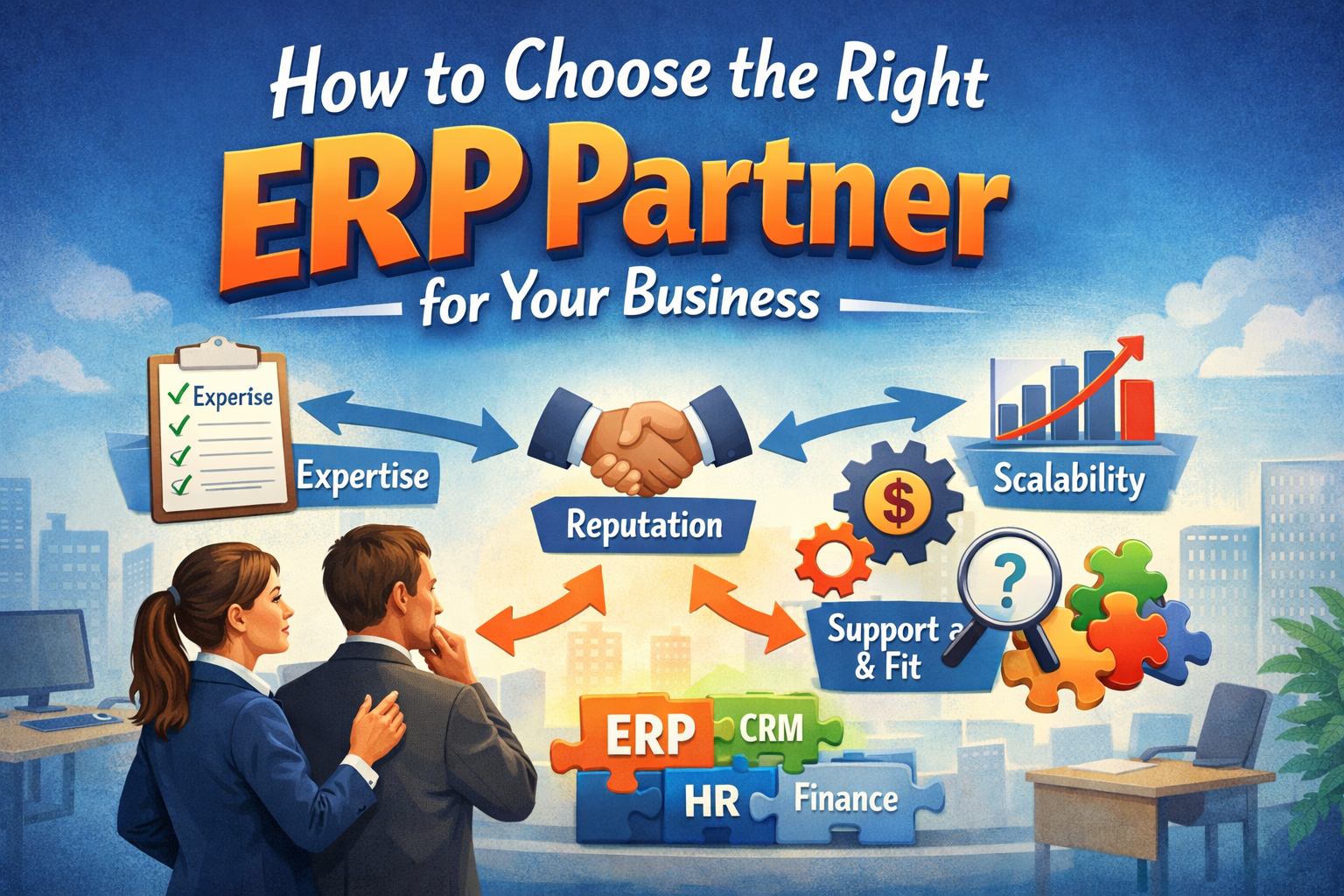
Digital transformation is no longer a choice; it is a business imperative. And at the heart of most successful transformations lies a well-implemented Enterprise Resource Planning (ERP) system. But here is the reality: even the most powerful ERP software will underdeliver if it is implemented by the wrong partner.
Choosing the right ERP implementation partner is one of the most consequential decisions your business will make. The wrong choice can result in budget overruns, missed deadlines, poor user adoption, and ultimately, a system that does not serve your business the way it should. The right partner, on the other hand, becomes an extension of your team, aligning the technology with your goals and delivering measurable value long after go-live.
Companies like Saisatwik Technologies have built their reputation on exactly this kind of partnership, offering end-to-end ERP consulting, implementation, and support that goes well beyond a standard software rollout.
Table of Contents
Why Choosing the Right ERP Partner Matters
An ERP implementation is not a one-time software installation. It is a long-term investment that touches every department in your organisation, from finance and procurement to sales, HR, and operations. The partner you choose will shape how well that investment pays off.
According to industry research, a significant portion of ERP projects face challenges related to scope creep, timeline delays, and budget overruns, and the most common root cause is poor partner selection. When a partner lacks deep domain knowledge or fails to understand your business processes, the result is a system that is technically deployed but operationally misaligned.
The right ERP consulting partner will do more than configure software. They will understand your workflows, guide your team through change management, ensure thorough training, and provide post-go-live support to keep things running smoothly as your business grows.
Key Factors to Consider When Choosing an ERP Partner
Below are some of the factors to consider while choosing an ERP Partner:
1. Industry Experience and Domain Expertise
Not all ERP partners are created equal, and one of the most important differentiators is industry experience. A partner who has worked extensively in your sector, whether manufacturing, retail, logistics, healthcare, or professional services, brings a level of domain knowledge that directly accelerates your implementation.
They understand the terminology, the compliance requirements, the workflows, and the pitfalls specific to your industry. This means less time spent explaining your business and more time spent building the right solution. It also reduces customisation risk, since an experienced partner will already know which out-of-the-box features fit your needs and where tailored development is truly necessary.
When evaluating a potential ERP partner, ask for client references in your industry and review case studies that reflect similar business challenges to your own.
2. Technical Expertise and Certifications
The technical credentials of your ERP partner matter enormously. Certifications from leading ERP vendors such as SAP, Microsoft, and Oracle are not just badges; they demonstrate that a partner has met rigorous standards of knowledge, capability, and best-practice delivery.
Beyond certifications, look for partners who maintain a skilled technical team capable of handling complex integrations, data migration, and system customisation. ERP implementations rarely happen in isolation. Your system needs to connect with existing tools, third-party applications, and cloud infrastructure. A technically strong partner ensures these integrations are built to last.
3. Proven Track Record and Case Studies
Past performance is one of the strongest indicators of future success. When assessing an ERP partner, request detailed case studies that go beyond surface-level success stories. Look for specifics: What was the business challenge? What solution was implemented? What were the measurable outcomes?
A partner with genuine implementation maturity will be comfortable sharing references, demonstrating a portfolio of successful projects across different sizes and industries. A lack of verifiable evidence should be treated as a red flag.
4. Customisation and Scalability Capabilities
Your business today is not the same as it will be in three or five years. An ERP solution should be flexible enough to grow with you, and your implementation partner should have the capability to make that happen.
Ask prospective partners how they approach customisation requests, how they manage system upgrades, and whether they have experience with cloud-based deployments and modular ERP architectures. The best partners will help you design a solution that meets your current needs while building in the scalability to support future growth without requiring a complete overhaul.
5. Post-Implementation Support and Training
The work does not end at go-live. In many ways, that is when the real work begins. A strong ERP partner will offer structured post-implementation support that includes troubleshooting, performance optimisation, and regular system health reviews.
Equally important is user training. Even the best ERP system will fail to deliver ROI if your team does not know how to use it effectively. Look for partners who invest in comprehensive training programmes tailored to different user roles, and who remain available to provide ongoing guidance as your team grows and your processes evolve.
6. Understanding of Your Business Processes
There is a critical difference between an ERP partner who installs software and one who truly understands your business. The best implementations begin with a thorough discovery phase, where the partner takes the time to map your existing processes, understand your pain points, and align the ERP solution to your actual workflows.
This collaborative approach ensures that the system is configured to the way your business operates, not the other way around. Be wary of partners who rush through requirements gathering or offer generic solutions without asking the right questions.
7. Transparent Pricing and Clear Communication
Cost overruns are one of the most common complaints in ERP projects, and they often stem from unclear pricing structures. A trustworthy ERP partner will provide a detailed cost breakdown upfront, covering software licensing, implementation services, customisation, training, and post-go-live support.
Watch out for partners who are vague about additional fees for customisation or maintenance. Clear, honest communication from the start is a sign of a partner who values the relationship as much as the contract.
8. Reviews, References, and Reputation
In the digital age, a partner’s reputation is more visible than ever. Check independent review platforms such as Clutch, Google Business profiles, and LinkedIn recommendations. Look for patterns in the feedback: consistent mentions of responsiveness, technical quality, and long-term partnership are all strong positive signals.
Ask for direct references and speak with past or current clients. Their firsthand experience will give you insights that no sales pitch ever could. Word-of-mouth credibility, built over years of delivering results, remains one of the most reliable ways to evaluate an ERP consulting partner.
Common Mistakes to Avoid When Selecting an ERP Partner
Choosing based on price alone. The lowest quote rarely delivers the best outcome. ERP implementation is a strategic investment, and cutting corners on partner quality often leads to far greater costs down the line in rework, delays, and lost productivity.
Ignoring post-implementation support. Many businesses focus so heavily on the implementation phase that they overlook what happens after go-live. Ensure your partner has a clear and committed support plan before you sign anything.
Not evaluating cultural and communication compatibility. Your ERP partner will work closely with your internal teams for months, sometimes years. A mismatch in communication style, responsiveness, or working culture can derail even the most technically sound implementation.
Overlooking data migration and integration expertise. Migrating data from legacy systems is one of the most complex parts of any ERP project. A partner without strong data migration capabilities can cause significant disruption. Always verify their experience in this area.
How Saisatwik Technologies Helps Businesses with ERP Success
At Saisatwik Technologies, ERP is not just a service offering; it is a core competency. With deep expertise in SAP solutions including SAP S/4HANA, SAP Analytics Cloud, and SAP Business Technology Platform (BTP), the team brings together technical excellence and real-world business understanding to deliver implementations that truly work.
The Saisatwik approach is built around four pillars: consulting, implementation, migration, and ongoing support. From the initial discovery phase through to post-go-live optimisation, the team works as a collaborative partner, not just a vendor. Every engagement begins with a thorough understanding of the client’s business, ensuring that the solution is tailored to their specific processes, goals, and growth plans.
What sets Saisatwik apart is the combination of certified technical expertise and a commitment to transparent, client-focused delivery. Whether it is a greenfield SAP S/4HANA implementation, a system migration from a legacy ERP, or the development of advanced analytics capabilities, Saisatwik brings the experience and the rigour to get it right, on time and within budget.
Businesses that partner with Saisatwik Technologies consistently highlight the team’s responsiveness, technical depth, and ability to translate complex requirements into practical, scalable ERP solutions.
Conclusion
Choosing the right ERP partner is not simply a procurement exercise. It is a strategic decision that will shape the efficiency, agility, and growth potential of your business for years to come. The factors covered in this guide, from industry expertise and certifications to post-implementation support and transparent pricing, are not optional considerations. They are the foundation of a successful ERP journey.
Evaluate your potential partners with the same rigour you would apply to any major business investment. Ask the hard questions, check the references, and look beyond the pitch to the evidence of real-world delivery.
Looking for a trusted ERP consulting partner? Connect with Saisatwik Technologies to transform your business with expert-driven ERP solutions. Visit saisatwik.com to learn more and start the conversation today.
Frequently Asked Questions
What is an ERP implementation partner and why do I need one?
An ERP implementation partner is a consulting firm or technology company that helps you select, configure, deploy, and support an ERP system. You need one because ERP software alone does not guarantee success. A qualified partner ensures the system is aligned to your specific business processes, your team is properly trained, and you have support when issues arise post-launch.
How do I know if an ERP partner has the right experience for my industry?
Ask for case studies and client references specific to your sector. A partner with genuine industry experience will speak your language, understand your compliance requirements, and be able to demonstrate past implementations in businesses similar to yours without needing extensive background briefing from you.
How much of the ERP implementation process should the partner handle?
A full-service ERP partner should cover the entire lifecycle, including requirements gathering, system design, configuration, data migration, testing, training, go-live support, and post-implementation optimisation. Be cautious of partners who only cover installation and configuration, leaving you to manage everything else on your own.
Why do so many ERP projects fail, and how can the right partner prevent that?
Most ERP project failures trace back to poor planning, misaligned expectations, inadequate change management, and weak post-go-live support, all of which are directly influenced by your choice of partner. The right partner mitigates these risks through structured discovery, clear communication, and a commitment to long-term success rather than just delivering a technical deployment.
What questions should I ask an ERP partner before signing a contract?
Some of the most important questions to ask include: How many projects have you delivered in my industry? Can you provide client references? What does your post-implementation support model look like? How do you handle scope changes? What is included in your pricing, and what is billed separately? The answers will tell you a lot about their transparency and maturity.

0 Comments