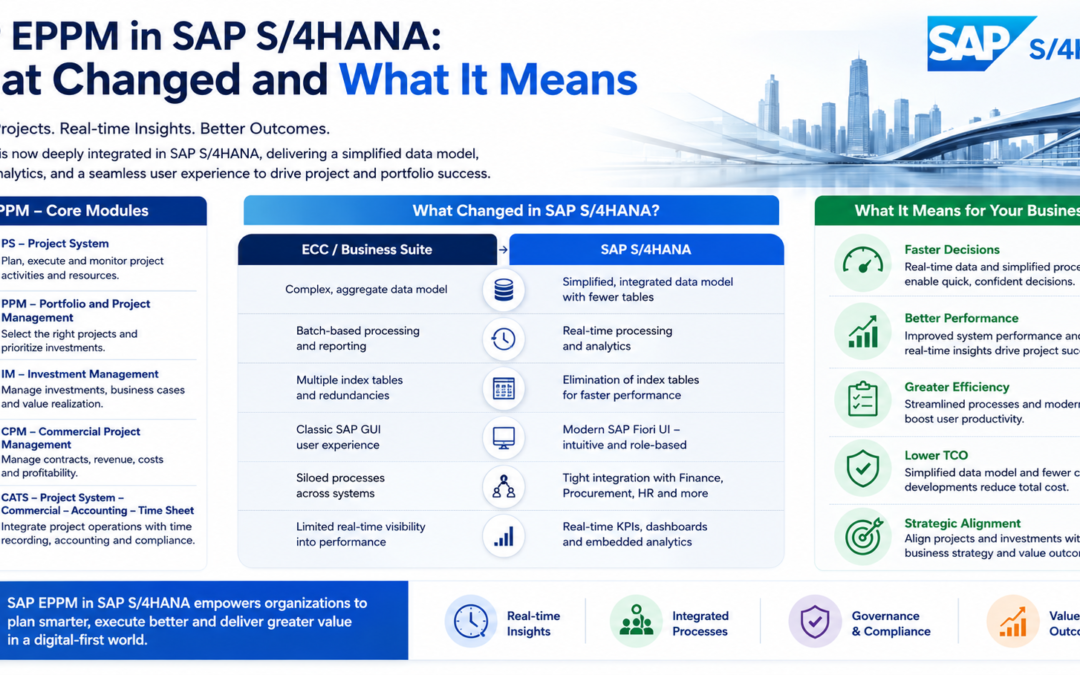
SAP PS in S/4HANA: Key Differences from ECC Explained
Quick Answer SAP PS in S/4HANA keeps the same core objects and most of the same transactions as ECC: project definitions, WBS elements, networks, CJ20N and the period-end close. The differences sit around the module. Finance postings land in the Universal Journal....SAP EPPM Licensing Explained: Models, Cost Drivers, and Fit
Quick Answer SAP EPPM licensing is not one license. Each module (SAP PS, PPM, IM, CPM, CATS) is licensed separately, usually by named user or by a usage metric, on top of the underlying SAP S/4HANA entitlement, and SAP publishes the framework in its software pricing...SAP EPPM Architecture and Integration: How It All Connects
Quick Answer SAP EPPM architecture is a layered model: five modules (SAP PS, PPM, IM, CPM, CATS) sit on top of the SAP S/4HANA core, share one financial data store (the Universal Journal, table ACDOCA), and connect outward to SAP FICO, HCM, MM and SD through native...